Acala Thangka Meaning: The Immovable One in Buddhist Art
Acala, also spelled Achala, is known in English as the Immovable One. The subject often has a wrathful appearance, but exact forms vary. This guide explains how to read the image carefully without turning religious symbolism into a sales promise.
Acala and Achala are two spellings of the same name
English-language art records use both Acala and Achala. The Sanskrit name is commonly translated as the Immovable One. In Himalayan and Tibetan Buddhist art, Acala can appear in several standing, kneeling, colored, and multi-figure forms.
Because the forms vary, a listing should not identify a precise ritual form from a name or body color alone. The safest approach is to compare the visible posture, hands, attributes, face, and surrounding figures with reliable references, while stating when a narrower identification has not been documented.
Wrathful appearance is visual language, not a threat
Acala is often represented with a forceful expression. Frequently documented forms carry a sword and lasso, and some are shown within flames. These features belong to Buddhist iconography and vary by source text and tradition.
A seller can explain visible attributes and the traditional name, but should not promise that the object will remove obstacles, protect the buyer, or cause a real-world result. Cultural meaning and a commercial guarantee are different claims.
What is documented for the current miniature
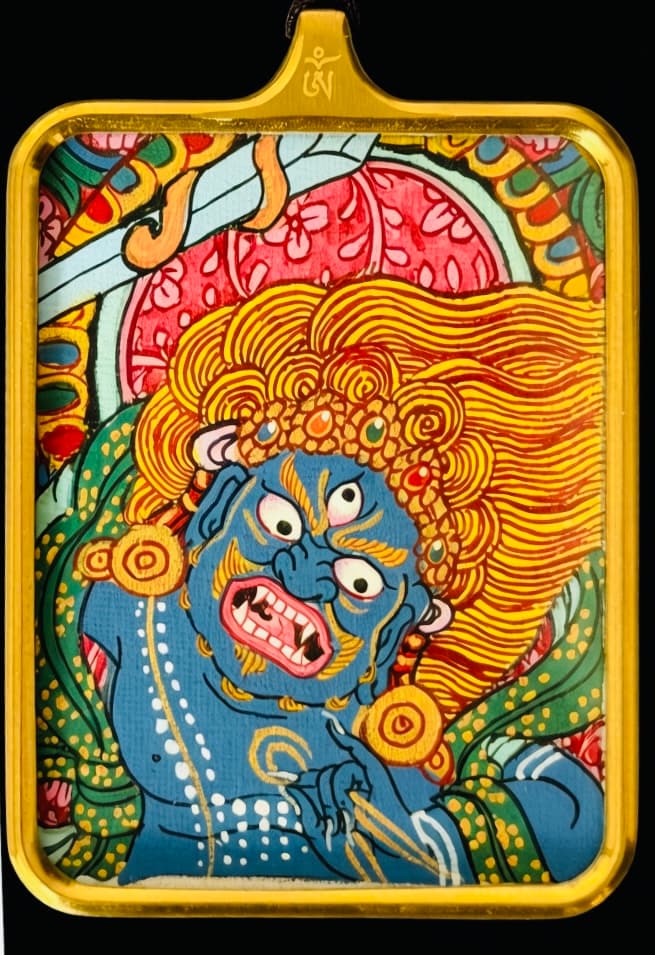
The available object is recorded as a hand-painted 5 × 4 cm Acala miniature in a pendant-style frame. Its public price is US$350, inventory is one, and its product record is RT-2026-005.
The object is listed as a contemporary hand-painted work made in China. The live product page carries the current photographed view, dimensions, price, record reference, and international-purchase information.
What an overseas buyer should verify
Check whether the current photograph is detailed enough for the face, hands, attributes, painted surface, and frame. Confirm the 5 × 4 cm scale—it is much smaller than a conventional wall thangka—and request further images if the reverse, edge, or condition affects your decision.
Before payment, review shipping, duties, return conditions, and the individual artwork record. International buyers should budget separately for possible import taxes or carrier charges under DAP shipping terms.
Frequently asked questions
Is Acala the same as the Japanese Fudō Myōō? The names refer to the same Buddhist figure across related traditions, but regional art, ritual context, and visual form can differ. This listing describes only the object shown.
Does wrathful imagery mean the painting is negative? No. Wrathful appearance is part of Buddhist visual language. Interpretation should come from the relevant tradition, not from the facial expression alone.
How small is the current miniature? The recorded painted object is 5 × 4 cm, so check that scale carefully before ordering.
Sources and further reading
- Buddhist Deity: Achala — Kneeling Forms · Himalayan Art Resources
- Buddhist Deity: Achala — Main Page · Himalayan Art Resources
From the guide to a specific work
The Acala miniature currently available
This is the direct Acala subject match in the first batch. Use the product page for the actual object, price, dimensions, and record status.
Acala Miniature Thangka Pendant
Acala Miniature Thangka Pendant
$350.00
Why it relates to this guide
A hand-painted 5 × 4 cm Acala miniature, listed at US$350 without an undocumented workshop, lineage, or exact ritual-form claim.
Browse available works
View current works, dimensions, materials, and prices.