Akasagarbha Thangka Meaning, Name, and Buyer Checklist
Akasagarbha is a bodhisattva whose name appears in several English spellings, including Akashagarbha and Ākāśagarbha. Museum records also use the Japanese name Kokūzō. This guide gives overseas buyers a clear starting point without pretending that one photograph proves every iconographic detail.
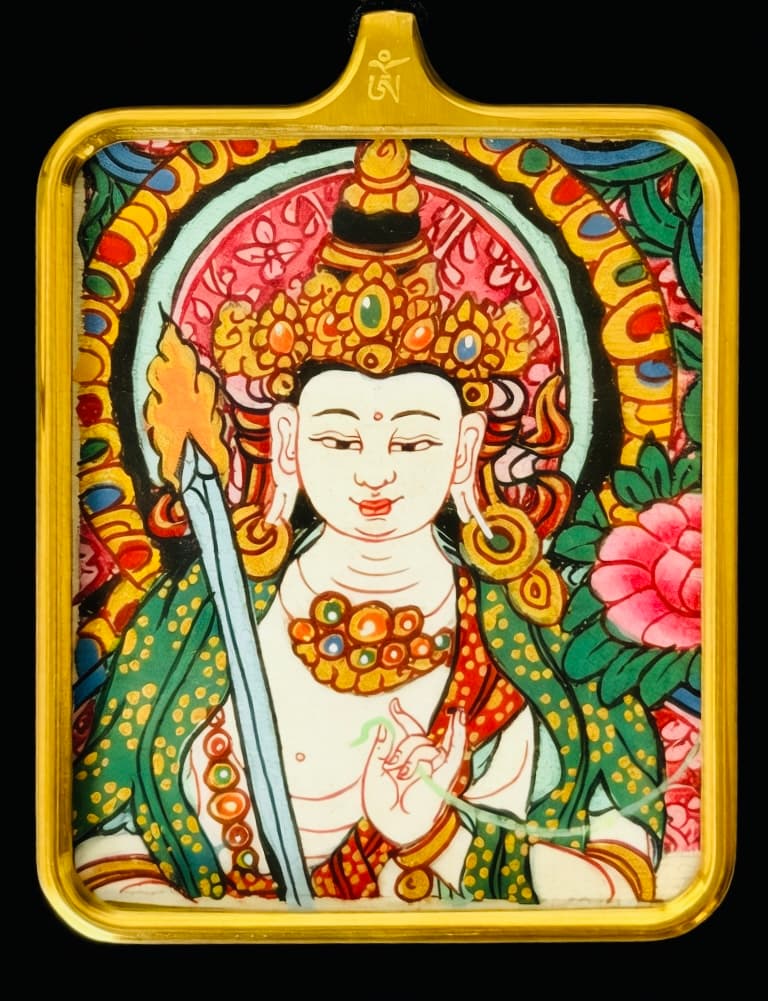
Why the name has several English spellings
Akasagarbha, Akashagarbha, and Ākāśagarbha are transliterations of the same Sanskrit name. East Asian museum collections may use Kokūzō, the Japanese reading. Search results can therefore look like different subjects even when the records refer to the same bodhisattva.
The name is often explained through the imagery of vast or open space. Museum descriptions associate Akasagarbha with expansive wisdom and merit, but a store should present this as cultural context, not as a promise that the owner will gain memory, intelligence, success, or spiritual attainment.
Why identification still requires the individual image
Museum records show that Akasagarbha iconography varies across regions and ritual contexts. Posture, color, hand attributes, crown, lotus, and surrounding figures may not be consistent from one work to another.
For that reason, the subject name is a starting point rather than a full attribution. A single product photograph may support a general identification while remaining insufficient to identify a narrow regional form, lineage, artist, or date.
What is documented for the current miniature
The available work is recorded as a hand-painted 5 × 4 cm Akasagarbha miniature in a pendant-style frame. Its public price is US$350, inventory is one, and the artwork record is RT-2026-006.
The object is listed as a contemporary hand-painted work made in China. Its live product page carries the current photograph, dimensions, price, availability, record reference, and shipping information.
A practical buying checklist
Verify the small 5 × 4 cm scale and decide whether a miniature rather than a wall-format thangka suits your intended display. Examine the face, hands, surface, frame, and visible condition; request a reverse or side view if construction details matter to you.
Check the live product page for current inventory and price, then read the shipping, duties, and return pages. Overseas buyers should allow for destination-country import charges under DAP terms and should ask before payment when any missing record is important to the purchase.
Frequently asked questions
Are Akasagarbha and Akashagarbha different figures? No. They are common English spellings of the same Sanskrit name; Kokūzō is another name used in Japanese collections.
Can the image guarantee wisdom or better memory? No. Those associations belong to religious and cultural interpretation and should not be sold as guaranteed personal results.
Can I compare another spelling when searching? Yes. Akasagarbha and Akashagarbha are both useful English spellings for the same subject name.
Sources and further reading
- Akasagarbha (space-womb) Bodhisattva · Tokyo National Museum / e-Museum
- Painting representing Ākāśagarbha · The British Museum
From the guide to a specific work
The Akasagarbha miniature currently available
The listing below is the direct subject match. Its record distinguishes the identified subject from the still-unknown artist, workshop, pigments, and date.
Akasagarbha Miniature Thangka Pendant
Akasagarbha Miniature Thangka Pendant
$350.00
Why it relates to this guide
A hand-painted 5 × 4 cm Akasagarbha miniature, listed at US$350 with one photographed view and no unsupported Rebgong-origin claim.
Browse available works
View current works, dimensions, materials, and prices.