How to Read Offerings and Attributes in a Thangka
When someone searches for "How to Read Offerings and Attributes in a Thangka", they are usually not asking for a slogan. They are trying to understand whether this kind of Rebgong thangka deserves attention, how to look at it, and what evidence should be visible before a purchase feels responsible. This is a subject guide, not a religious instruction manual. The goal is to help a reader recognize the visual language of the image, understand common symbols, and return to the actual artwork with better questions.
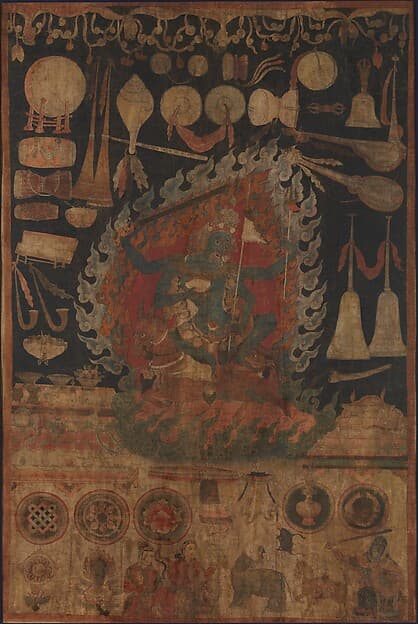
What this question is really asking
When someone searches for "How to Read Offerings and Attributes in a Thangka", they are usually not asking for a slogan. They are trying to understand whether this kind of Rebgong thangka deserves attention, how to look at it, and what evidence should be visible before a purchase feels responsible. This is a subject guide, not a religious instruction manual. The goal is to help a reader recognize the visual language of the image, understand common symbols, and return to the actual artwork with better questions.
The practical question is not whether a thangka sounds mysterious. It is whether the page helps the reader see the subject, the hand-painted surface, the size, the condition, and the limits of what is known. A professional independent store should make the buyer calmer and better informed, not more impulsive.
This guide focuses on lotus, sword, scripture, vase, medicine bowl, vajra, ritual objects, and how attributes help identify subjects. It treats Rebgong thangkas as contemporary artworks connected with Buddhist visual culture and regional painting practice. It does not use sacred imagery as a shortcut for exaggerated sales claims.
Why this belongs in a Rebgong thangka context
Rebgong, also encountered in English as Regong, is associated with the Tongren area of Huangnan, Qinghai, and with a broader regional tradition of Buddhist visual arts. For an international buyer, this background is useful only when it leads to clearer information: what the subject is, how the work is made, what the page can show, and what remains unconfirmed.
In this article, the key clues are attributes, offerings, lotus, sword, vajra, medicine bowl. These words may appear in titles, product descriptions, image captions, artist or workshop notes, or educational pages. They should help the reader inspect the artwork rather than replace inspection with a romantic story.
A Rebgong origin claim should never be used as a blanket guarantee for every single object. Each artwork still needs its own record: full image, close details, dimensions, material notes, condition notes, and any available artist or workshop information. If a detail is unknown, the honest word is unknown.
Where to start when looking at the artwork
Start with the full image. A full view lets the viewer judge the main figure or central structure, the balance of the composition, the condition of the painted area, and whether the artwork would suit a study, living room, meditation corner, gift setting, or collection wall.
Then move to close details. The face, eyes, hand gestures, attributes, garment folds, lotus seat, halo, border ornament, gold detail, and background motifs often reveal the patience of the hand-painted work. Close photos are not the same as formal authentication, but they make the listing inspectable.
Finally, read the record. A serious page should state the title, subject, dimensions, mounting format, material notes, image set, condition, and artist or workshop information where available. Missing information should be marked as unrecorded or unconfirmed, not filled with invented stories.
How to read the subject without overclaiming
For a subject such as this, the point is to read the image without turning symbolism into a guarantee. Traditional visual language can speak about compassion, wisdom, longevity, protection, abundance, teaching, or discipline, depending on the subject. A responsible product page explains that language, then returns the reader to visible evidence in the painting.
The page should explain lotus, sword, scripture, vase, medicine bowl, vajra, ritual objects, and how attributes help identify subjects. It should also use plain English. Overseas readers may not know Chinese place names, Tibetan Buddhist names, or workshop vocabulary, so the page should define terms as they appear instead of hiding behind unexplained transliteration.
The most professional tone is specific but restrained. It can say what is visible, what is traditionally associated with a subject, what the store has recorded, and what the buyer should inspect. It should not say that buying or displaying the artwork will produce a guaranteed real-world result.
Who may find this guide useful
This guide is useful for first-time buyers, gift buyers, collectors who are comparing subjects, and readers who simply want to understand Rebgong thangka painting before choosing a work. It does not require the reader to become a specialist before appreciating the image.
A thangka can enter a home, study, or collection space, but it should not be treated like a disposable poster. A more respectful approach is to place it somewhere clean, stable, away from strong sunlight and humidity, and to keep the cultural and religious background in mind even when the purchase is primarily artistic.
If the thangka is a gift, the safest language is appreciation, respect, and thoughtful intention. A note can explain the subject name, size, hand-painted nature, display suggestion, and care reminders. It should not promise health, wealth, fate change, or spiritual effects.
What to verify before buying
Before buying, verify six things. Is the subject clearly named? Does the listing include a full front image, close details, back or mounting images, and condition views? Are dimensions and display format clear? Are material notes written with appropriate caution? Is artist or workshop information honest? Does the page identify what is unknown?
If this article later links to subject identification guides, detail photo guides, beginner guides, the reader should be able to use the same checklist across those pages. The point is not to force a purchase. The point is to let the buyer compare evidence in a stable way.
Price should be considered after the evidence. Rebgong thangka prices can be affected by size, subject complexity, line density, face detail, gold work, materials, mounting, condition, and the clarity of artist or workshop records. A title alone is never enough to explain a price.
Common mistakes to avoid
The first mistake is treating a thangka as a universal result machine. Thangkas can carry symbolic, cultural, devotional, and artistic meaning, but they should not be sold as tools that guarantee wealth, health, protection, luck, exam success, or fate change.
The second mistake is using regional background as a substitute for artwork evidence. Rebgong context matters, but every individual work still needs images, dimensions, material notes, condition notes, and a clear record of what is known.
The third mistake is replacing evidence with a master story. If the artist or workshop is not confirmed, the page should say so. A real interview, authorized studio note, or process photo can be valuable; an invented lineage claim damages trust.
The fourth mistake is making a contemporary work sound like an antique or cultural relic. A contemporary Rebgong thangka can be valuable as a living artwork without being described as temple-sourced, ancient, officially certified, or historically rare.
Reading and selection advice
After reading "How to Read Offerings and Attributes in a Thangka", return to a real artwork and ask practical questions. Do I like the overall visual mood? Is the subject clear? Are the important details visible? Does the back or mounting need to be shown? Does the written record match the images?
If a page has only one distant photo, the buyer cannot evaluate much. A stronger page should show the full artwork, key details, the mounting or reverse side, condition notes, and, when available, process images. Without real product photos, an article can educate, but it must not pretend that reference images are the product.
Good content should make the reader more deliberate. The reader should leave with better questions, not with pressure to buy quickly. That is how a serious Rebgong thangka website becomes different from a generic cross-border store.
FAQ
Question: Is this guide suitable for someone new to thangkas?
Answer: Yes. It starts from visible evidence: subject, full image, close details, size, materials, condition, and artwork records. The reader does not need to know specialist vocabulary first.
Question: What is the most important thing to check before buying?
Answer: The image set and artwork record. A full view, close details, back or mounting photos, condition notes, dimensions, materials, and honest attribution are more useful than broad adjectives.
Question: Can I choose only by symbolic meaning?
Answer: Symbolic meaning can guide the choice, but it should not be the only factor. The buyer should also consider visual preference, space, size, condition, documentation, and whether the page avoids exaggerated promises.
Question: What if artist or workshop information is incomplete?
Answer: Incomplete information does not automatically make a work unsuitable, but the page must say what is unrecorded or unconfirmed. It should not invent a master, temple, or certificate story.
Question: Does a thangka listing need to promise spiritual or practical effects?
Answer: No. A responsible website can explain cultural context, image symbolism, craft, display, and care. It should not promise luck, healing, wealth, protection, religious results, or investment returns.
Browse contemporary works
Product pages keep source notes, parcel profile, dispatch timing, and import terms close to the buying decision.