Buddhist Figure Names in Thangka Art: A Careful Crosswalk
The same Buddhist figure can appear under Sanskrit, Tibetan, Chinese, Japanese, and modern English spellings. This source-linked reference helps readers move between eight name fields represented in our current catalog without turning a useful search clue into an unsupported identification.
How to use this source-linked reference
Rebgong Thangkas is a commercial store, and this educational page links to works that we offer for sale. Those links are product disclosures, not independent scholarly endorsements. The museums, research projects, and scholars cited here have not examined, authenticated, appraised, or certified our current works.
Our catalog names are recorded subjects: they report the subject attached to an individual seller record and the image offered under that record. A museum comparison may help a reader formulate better questions, but it cannot prove the maker, date, workshop, region, lineage, ritual status, consecration, materials, provenance, authenticity, or value of a different object.
The evidence is separated into three practical levels. An institutional object or authority record is strong evidence for the terminology and visible details of that particular object. Institutional research, a specialist catalog, or a peer-reviewed study can clarify a name or form within its stated context. A current product record establishes what the seller calls an offered object and which public facts belong to that record; it does not turn the label into independent authentication.
At-a-glance name crosswalk
The table distinguishes direct cross-language names, alternate romanizations, broad and narrow forms, and terms that are merely related. Use the stable subject anchors to move to the detailed evidence below. The final column is as important as the name match: it records the point at which a useful comparison would become an unsupported claim.
| Recorded subject | Names a reader may encounter | Relationship | Identification limit |
|---|---|---|---|
| Four-Armed AvalokiteshvaraDetailed guide | Avalokiteshvara · Chenrezig · Shadakshari Lokeshvara | Avalokiteshvara and Chenrezig are familiar Sanskrit- and Tibetan-context names. Shadakshari is a narrower four-armed form, not a label for every four-armed image. | Four visible arms alone do not establish Shadakshari, lineage, origin, age, or consecration. |
| Green TaraDetailed guide | Tara · Green Tara · Syamatara | Tara names a broad figure with multiple forms. Green Tara is a specific form rather than a color label for every female bodhisattva image. | Green color, a lotus, or a pendant leg cannot identify the form by itself or promise a spiritual result. |
| Yellow JambhalaDetailed guide | Jambhala · Yellow Jambhala · Dzambhala | Jambhala includes several color and textual forms. Yellow Jambhala is narrower, but it still does not describe one invariant composition. | A mongoose, fruit, yellow body, or wealth association does not prove an exact form or any financial outcome. |
| AcalaDetailed guide | Acala · Achala · Fudō Myōō | Acala and Achala are common romanizations. Fudō Myōō is the Japanese-context name within the broader identity field, with region-specific forms. | A sword, rope, flames, or fierce face alone does not establish Acala or a specific Himalayan or Japanese form. |
| AkasagarbhaDetailed guide | Akasagarbha · Akashagarbha · Ākāśagarbha · Kokūzō | Akasagarbha, Akashagarbha, and Ākāśagarbha are transliteration choices. Kokūzō is the Japanese name found in museum records. | A jewel, lotus, moon disc, or crown does not transfer a Japanese ritual context, date, or attribution to another image. |
| VairocanaDetailed guide | Vairocana · Vairochana · Mahāvairocana · Dainichi | Vairocana and Vairochana are common English spellings. Mahāvairocana and Dainichi require more specific doctrinal and regional context. | One hand gesture, white color, crown, or central position cannot establish every Vairocana form or a specific mandala. |
| PadmasambhavaDetailed guide | Padmasambhava · Guru Rinpoche · Lotus-Born | Padmasambhava and Guru Rinpoche refer to the same revered master in Tibetan Buddhist naming contexts. Lotus-Born is an associated translation or epithet. | A lotus hat, vajra, skull cup, staff, or teacher appearance alone cannot identify one of the eight manifestations. |
| Zaki LhamoDetailed guide | Zaki Lhamo · Drashi Lhamo · Trapchi Lhamo · Drapchi Lhamo · Palden Lhamo | Zaki is the stable seller-record name used here. Drashi and Trapchi have specialist or ethnographic support; Palden Lhamo is related but not an interchangeable product name. | A wrathful goddess appearance, dark color, tongue, skull ornament, or three eyes cannot flatten these names into synonyms. |
Four-Armed Avalokiteshvara / Chenrezig
The British Museum authority record places Avalokiteshvara and Chenrezig in the same wider name field. In Tibetan-context English, Avalokiteshvara is the familiar Sanskrit-derived name and Chenrezig the familiar Tibetan name. Four-Armed Avalokiteshvara describes an arm count within that field. Shadakshari Lokeshvara is an important four-armed form associated with the six-syllable mantra, but four arms alone do not prove that narrower classification.
A seated bodhisattva appearance, crown and ornaments, lotus seat, central hands joined near the chest, and outer hands carrying attributes can support comparison with familiar four-armed forms. The complete composition still matters: surrounding teachers, protectors, inscriptions, hand objects, posture, and regional conventions may narrow or change the reading.
Four arms do not establish a specific mantra practice, lineage, consecration, region, age, or authorship. RT-2026-002 and RT-2026-010 are seller records whose recorded subject is Four-Armed Avalokiteshvara (Chenrezig); the wording is not an independent museum attribution.
Green Tara
Tara names a figure with multiple peaceful and wrathful forms. Green Tara is a specific and widely represented form, not a generic label for every female bodhisattva or every green-painted figure. Project Himalayan Art distinguishes green and white forms, while The Met catalogs Green Tara beside White Tara in a Western Tibetan painting.
Institutional examples often show a peaceful female figure seated on a lotus, with one leg pendant or extended, a lowered hand in a giving gesture, and lotus blossoms. These are comparative clues only when the relevant details are genuinely visible and considered together.
Green color, a pendant leg, lotus, or giving gesture cannot identify the exact form by itself or establish a lineage, place of production, artist, date, or spiritual effect. RT-2026-004 records Green Tara as the seller-recorded subject of the offered miniature.
Yellow Jambhala
Jambhala is used for a Buddhist wealth-deity field that includes several colors and iconographic forms. Himalayan Art Resources documents yellow, black, white, red, and green forms, including more than one grouping under Yellow Jambhala. Yellow Jambhala is therefore narrower than Jambhala but still not one invariant composition.
One documented form combines one face and two hands with a fruit, a jewel-producing mongoose, and conch or treasure imagery. A Rubin Museum object also emphasizes the mongoose and conch shell. A substantial jeweled figure, yellow coloring, and those attributes can form a useful cluster of clues.
No single mongoose, fruit, yellow body, conch, or wealth association establishes the exact text, lineage, regional form, ritual use, or any financial outcome. RT-2026-003 records Yellow Jambhala as the subject of the offered miniature; the historical comparisons neither authenticate nor appraise it.
Acala / Achala
Acala and Achala are English romanizations for the figure often rendered as the Immovable One. Himalayan Art Resources uses Achala in headings while preserving Acala in translated source wording. The British Museum authority record connects Acala with Japanese Fudō Myōō. The names share a broad identity field, but regional depictions and religious classifications are not interchangeable in every detail.
Wrathful appearance, a sword, lasso or rope, and flames recur in institutional records. Specialist records also show standing and kneeling forms, different colors, and variations with or without a consort. Attributes and posture must therefore be compared as a group.
A sword, flames, blue body, fierce face, or kneeling posture alone cannot prove Acala, much less a specific Himalayan, Chinese, Korean, or Japanese form. RT-2026-005 records Acala as the current seller-record subject without assigning the object to a particular practice or regional tradition.
Akasagarbha / Akashagarbha
Akasagarbha, Akashagarbha, and scholarly Ākāśagarbha are transliteration choices for the same Sanskrit name. Japanese collections may use Kokūzō or Kokuzo Bosatsu. The British Museum links Kokuzo with Akasagarbha, and Japan's national e-Museum titles a Tokyo National Museum painting Akasagarbha while discussing Kokūzō in the record.
Those museum objects show a seated bodhisattva on a lotus before a moon disc and describe a jewel, lotus, crown, and hand gestures in their particular paintings. A full moon disc, lotus, jewel, and bodhisattva appearance can support comparison when an inscription or reliable record also agrees.
No single jewel, lotus, moon disc, crown, or hand position proves Akasagarbha. Resemblance to a Japanese ritual image does not transfer its region, period, ritual context, or promised benefit. RT-2026-006 uses Akasagarbha as its recorded subject and Akashagarbha as a search spelling.
Vairocana / Vairochana
Vairocana and Vairochana are common English spellings for the same broad Buddha subject. The Met uses Vairocana for an early Chinese sculpture, the British Museum uses Vairocana in its authority record, and Project Himalayan Art uses Vairochana for a visualization album. Mahāvairocana, Dainichi, and narrower forms such as Sarvavid Vairochana require more specific doctrinal or regional evidence.
Institutional examples show considerable variation: a teaching gesture in one object, a central Buddha with the Eight Great Bodhisattvas in another, and a particular visualization sequence in the album. Central position, hand gesture, crown, robes, mandala arrangement, and retinue are clues to compare collectively rather than a compulsory checklist.
One hand gesture, white color, crown, or central position cannot establish every Vairocana form, a specific mandala, lineage, consecration, or spiritual result. RT-2026-007 records Vairocana as the subject and Vairochana as an alternate spelling without claiming a narrower form.
Padmasambhava / Guru Rinpoche
Padmasambhava and Guru Rinpoche refer to the same revered master in Tibetan Buddhist naming contexts. A British Museum object record expressly gives both names. Project Himalayan Art explains the figure's historical and legendary context and the later formalization of eight manifestations. Lotus-Born is an associated translation or epithet; it does not identify every lotus-seated teacher.
A named British Museum bronze holds a vajra and skull cup and sits in a posture of royal ease. Other institutional examples show why dress, hat, implements, posture, attendants, manifestations, and narrative context must be read together.
A moustached teacher, lotus hat, vajra, skull cup, staff, or seated posture alone cannot identify Padmasambhava or one of the eight manifestations. RT-2026-008 pairs Padmasambhava and Guru Rinpoche to connect two established names, not to claim an independent determination of a particular manifestation.
Zaki Lhamo / Drashi Lhamo / Trapchi Lhamo
This is the least suitable entry for a simple equals sign. Our current records use Zaki Lhamo as the stable English rendering of their existing subject label. Himalayan Art Resources uses Drashi Lhamo for a wrathful female figure associated with a Lhasa temple. Daisuke Murakami's peer-reviewed field study uses Trapchi Lhamo for Tibetan Grwa bzhi lha mo and explains that Drapchi is common in written sources while Trapchi reflects local pronunciation in his study.
The evidence overlaps around a modern Lhasa cult and related naming discussions, but it does not justify treating Zaki, Drashi, Trapchi, Drapchi, Palden Lhamo, and Shri Devi as ordinary product-title synonyms. Murakami also reports that some informed locals do not, strictly speaking, regard Trapchi Lhamo as a Buddhist deity despite the monastery setting; this name field therefore sits at the boundary of the crosswalk rather than being forced into a universal taxonomy.
A dark wrathful goddess, extended tongue, skull ornament, mirror, claw-like feet, or three eyes can form a comparison cluster, but no one feature proves the identity. The Met's four-armed, mule-riding Palden Lhamo is a useful contrast, not proof of equivalence. RT-2026-001 and RT-2026-009 retain Zaki Lhamo as transparent seller-record terminology.
A five-step way to compare an image responsibly
Start with the record, not a search-result thumbnail: confirm which object, photograph, dimensions, and stable item number are being discussed. Then decide whether two names are direct cross-language equivalents, alternate romanizations, a broad and narrow form, or merely related terms.
Compare clusters rather than one feature. Count faces and limbs, then consider posture, hands, attributes, retinue, inscriptions, and overall composition together. Keep museum context separate from product facts: a museum record establishes facts about its own object and does not transfer its date, material, region, lineage, quality, or authority to a work for sale.
Ask for the evidence that would change a purchase decision. A sharper real photograph, reverse or edge view, readable inscription, source note, or qualified iconographic opinion is more useful than a confident but unsupported story.
What this crosswalk deliberately does not promise
This page does not authenticate any object, certify a religious identity, appraise quality or value, or guarantee that owning an image will produce protection, healing, wealth, memory, wisdom, luck, merit, awakening, or another personal result.
It also does not infer an artist, workshop, date, precise origin, materials, consecration, lineage, antique status, investment value, or provenance from subject matter. The useful conclusion is narrower: names can be matched at an appropriate evidence level, visible details can be described without overclaiming, and a buyer can ask better questions before purchasing.
Continue with a related guide
Names, visible clues, format differences, and object-level buying checks.
Vairocana (Vairochana) Buddha thangka guideA closer look at spelling, institutional examples, variation, and miniature scale.
Guru Rinpoche (Padmasambhava) thangka guideHow two established names relate and what a buyer still needs to verify.
Zaki Lhamo, Drashi, and Trapchi name guideThe specialist and fieldwork evidence behind the most qualified name field in this reference.
Thangka documentation: records and provenanceSeparate a seller record, source note, provenance history, certificate, and appraisal.
Sources and further reading
- Avalokiteśvara / Chenrezig authority record · British Museum
- Four-Armed Avalokiteshvara · Project Himalayan Art / Rubin Museum
- Sadaksari-Lokeshvara Surrounded by Manifestations and Monks, 1985.390.3 · The Metropolitan Museum of Art
- Tara glossary · Project Himalayan Art / Rubin Museum
- White Tara and Green Tara, 2012.460 · The Metropolitan Museum of Art
- Green Tara, C2006.66.19 · Rubin Museum of Himalayan Art
- Yellow Jambhala object · Himalayan Art Resources
- Jambhala iconographic forms · Himalayan Art Resources
- Yellow Jambhala, C2006.64.1 · Rubin Museum of Himalayan Art
- Achala main page · Himalayan Art Resources
- Achala kneeling forms · Himalayan Art Resources
- Acala / Fudō authority record · British Museum
- Fudō Myōō (Acala), 1983,0702,0.8 · British Museum
- Kokuzo-bosatsu (Akasagarbha), 1964,1212,0.4 · British Museum
- Akasagarbha (space-womb) Bodhisattva, A-989 · Tokyo National Museum / e-Museum
- Seated Buddha Vairocana, 43.24.3 · The Metropolitan Museum of Art
- Vairocana authority record · British Museum
- The All-Knowing Buddha Vairochana Visualization Album · Project Himalayan Art / Rubin Museum
- Vairochana with the Eight Great Bodhisattvas, 1919,0101,0.50 · British Museum
- Padmasambhava (Guru Rinpoche), 2001,1017.1 · British Museum
- Padmasambhava and His Manifestations · Project Himalayan Art / Rubin Museum
- The Spiritual Master Padmasambhava, 2012.459 · The Metropolitan Museum of Art
- Drashi Lhamo · Himalayan Art Resources
- Shri Devi forms · Himalayan Art Resources
- The Trapchi Lhamo Cult in Lhasa · Revue d’Études Tibétaines 27 (2013), Daisuke Murakami
- Offerings to the Goddess Palden Lhamo, 1983.510.1 · The Metropolitan Museum of Art
From the guide to a specific work
Current catalog examples, disclosed separately from the reference
The name crosswalk is educational. The links below are a clearly disclosed commercial section showing which seller-recorded subjects appear in the current catalog; the cited institutions have not reviewed these works.
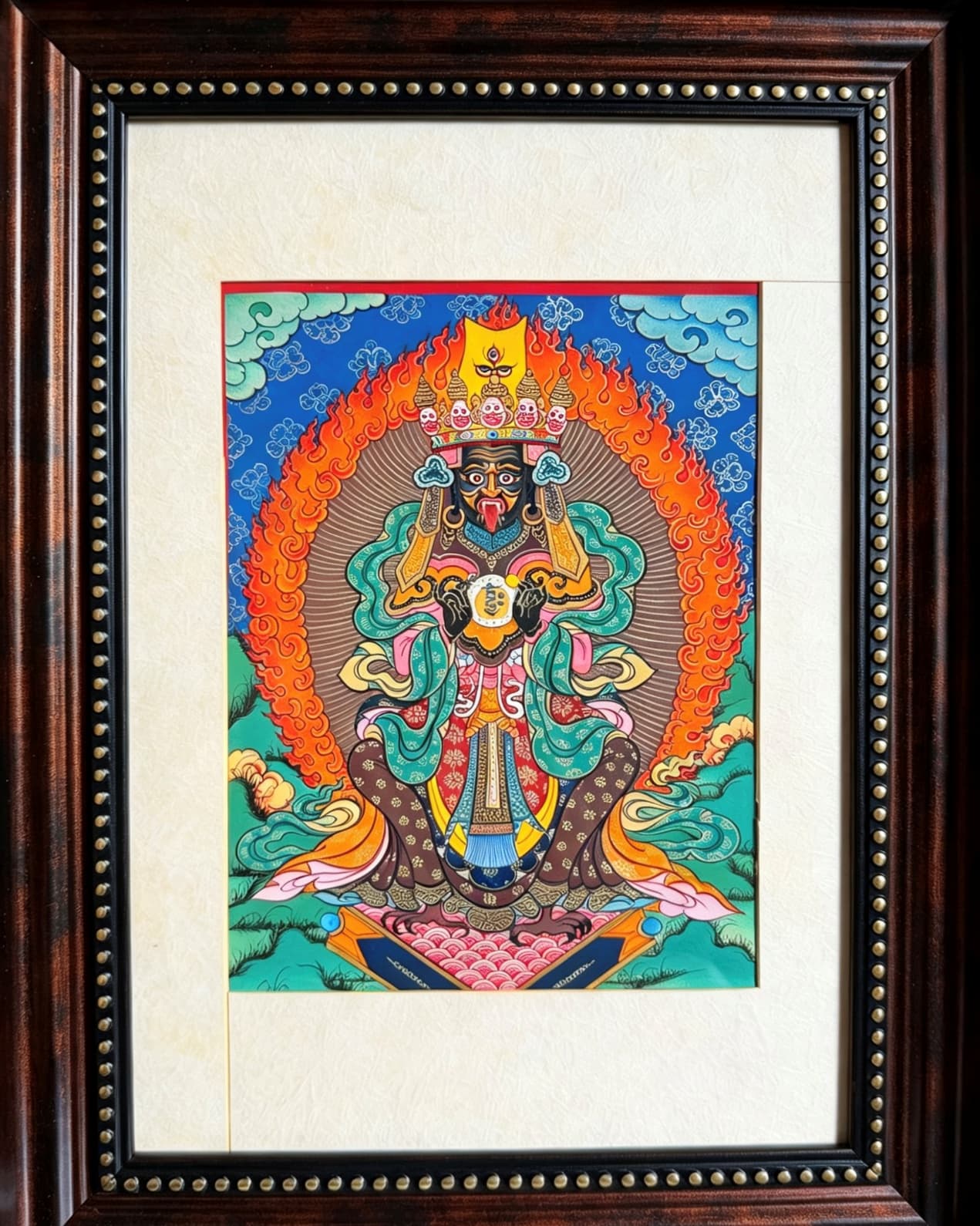
Zaki Lhamo Framed Thangka
Zaki Lhamo Framed Thangka
$5,550.00
Why it relates to this guide
Seller record RT-2026-001 uses Zaki Lhamo as its recorded subject and identifies a framed format with a 15 × 20 cm painting center.
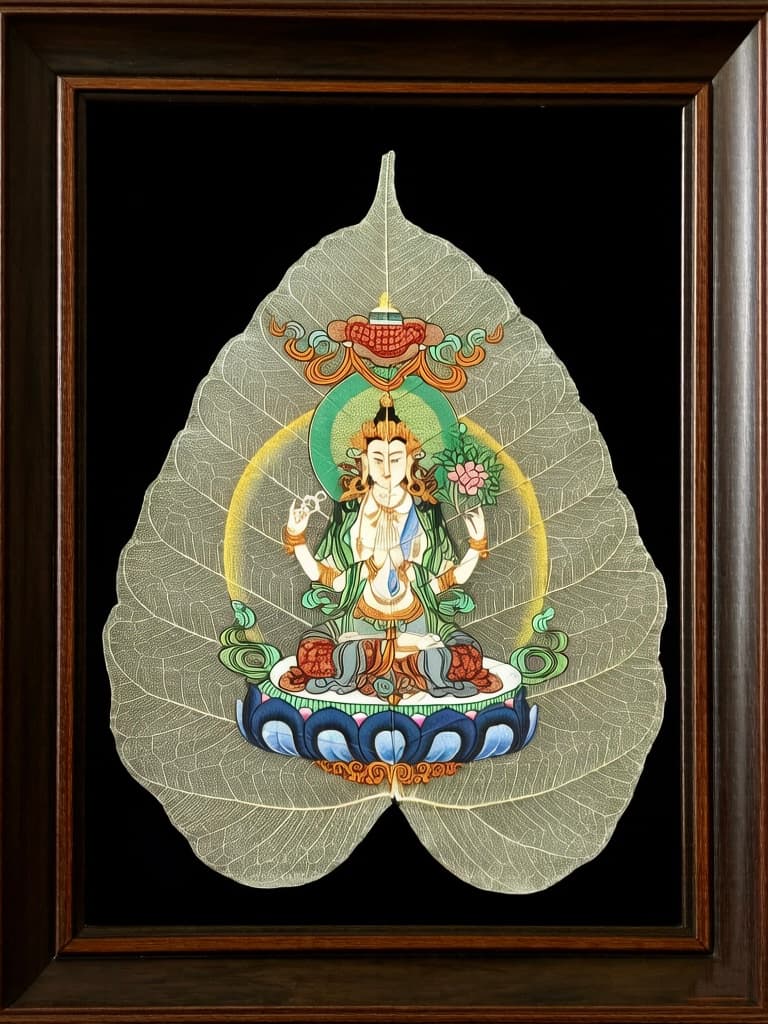
Bodhi Leaf Four-Arm Chenrezig Thangka
Bodhi Leaf Four-Arm Chenrezig Thangka
$1,300.00
Why it relates to this guide
Seller record RT-2026-002 uses Four-Armed Avalokiteshvara (Chenrezig) as its recorded subject and identifies a framed bodhi-leaf surface.
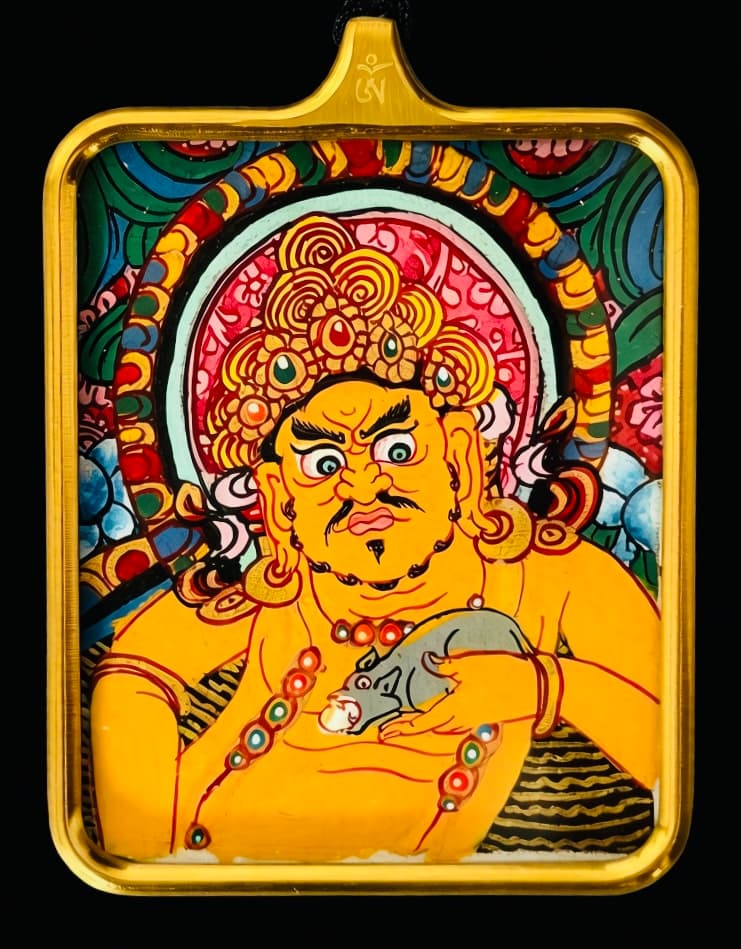
Yellow Jambhala Miniature Thangka Pendant
Yellow Jambhala Miniature Thangka Pendant
$350.00
Why it relates to this guide
Seller record RT-2026-003 uses Yellow Jambhala as its recorded subject and identifies a hand-painted 5 × 4 cm pendant-style miniature.
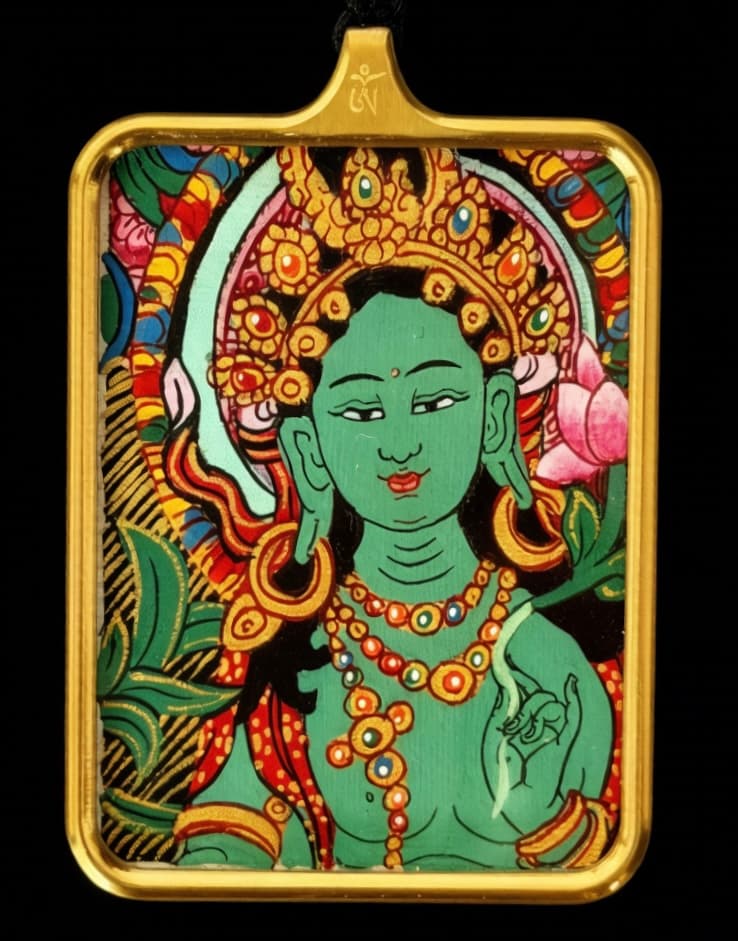
Green Tara Miniature Thangka Pendant
Green Tara Miniature Thangka Pendant
$350.00
Why it relates to this guide
Seller record RT-2026-004 uses Green Tara as its recorded subject and identifies a hand-painted 5 × 4 cm pendant-style miniature.
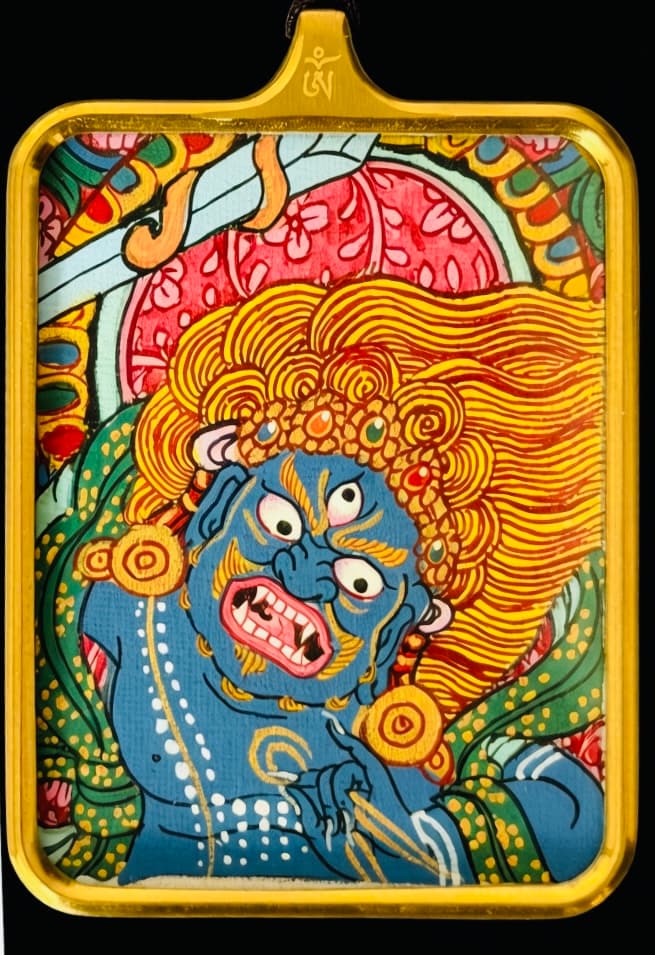
Acala Miniature Thangka Pendant
Acala Miniature Thangka Pendant
$350.00
Why it relates to this guide
Seller record RT-2026-005 uses Acala as its recorded subject and identifies a hand-painted 5 × 4 cm pendant-style miniature.
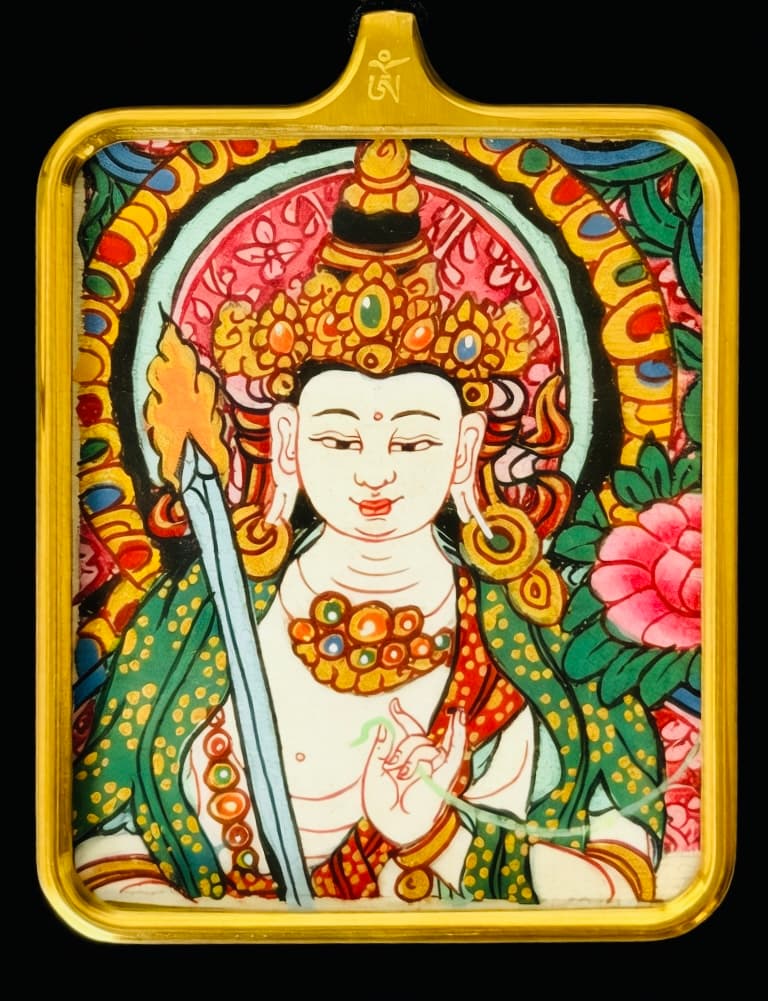
Akasagarbha Miniature Thangka Pendant
Akasagarbha Miniature Thangka Pendant
$350.00
Why it relates to this guide
Seller record RT-2026-006 uses Akasagarbha as its recorded subject and identifies a hand-painted 5 × 4 cm pendant-style miniature.
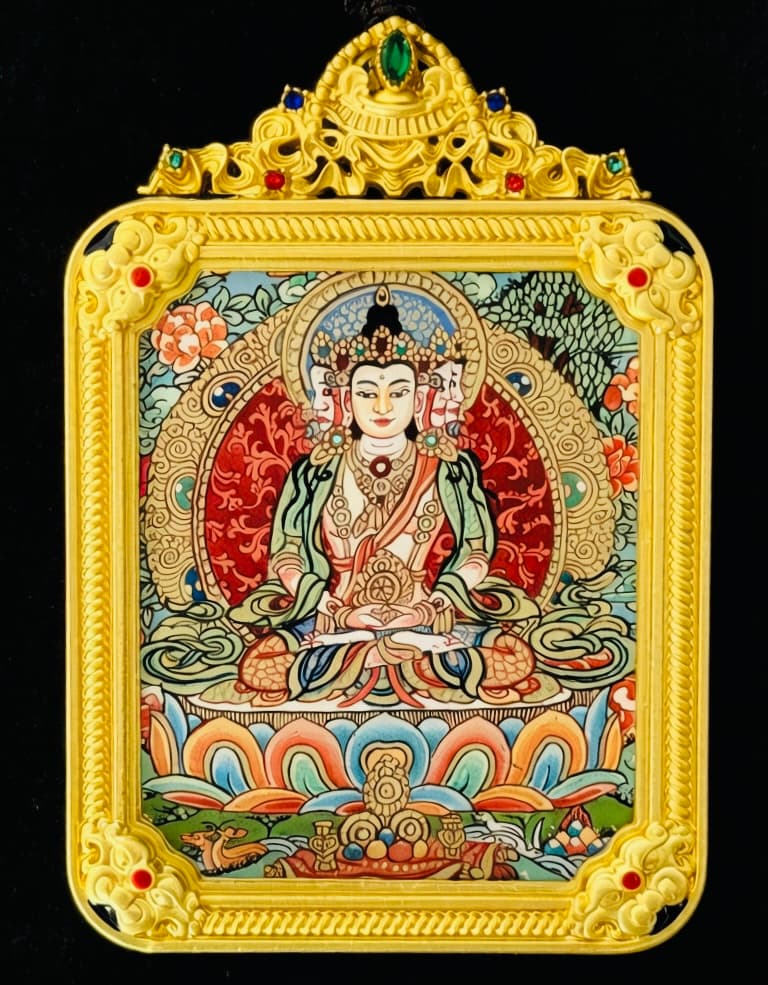
Vairocana Miniature Thangka Card
Vairocana Miniature Thangka Card
$4,150.00
Why it relates to this guide
Seller record RT-2026-007 uses Vairocana as its recorded subject and identifies a hand-painted 5 × 4 cm miniature card.
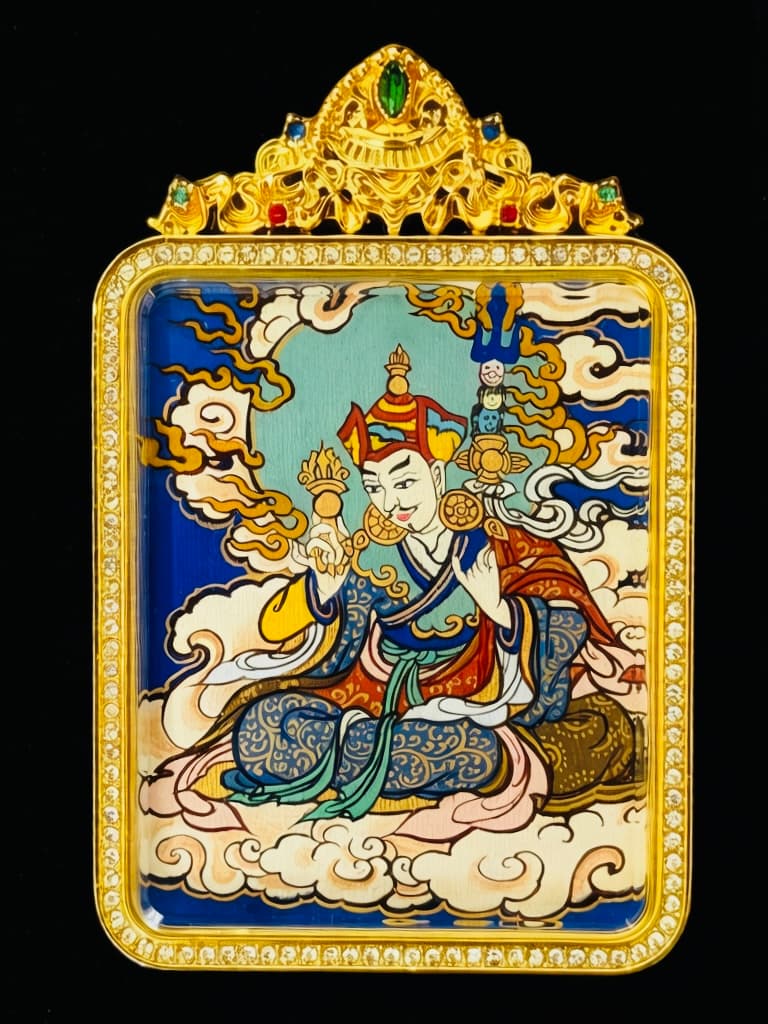
Padmasambhava Miniature Thangka Card
Padmasambhava Miniature Thangka Card
$2,000.00
Why it relates to this guide
Seller record RT-2026-008 uses Padmasambhava (Guru Rinpoche) as its recorded subject and identifies a hand-painted 5 × 4 cm miniature card.
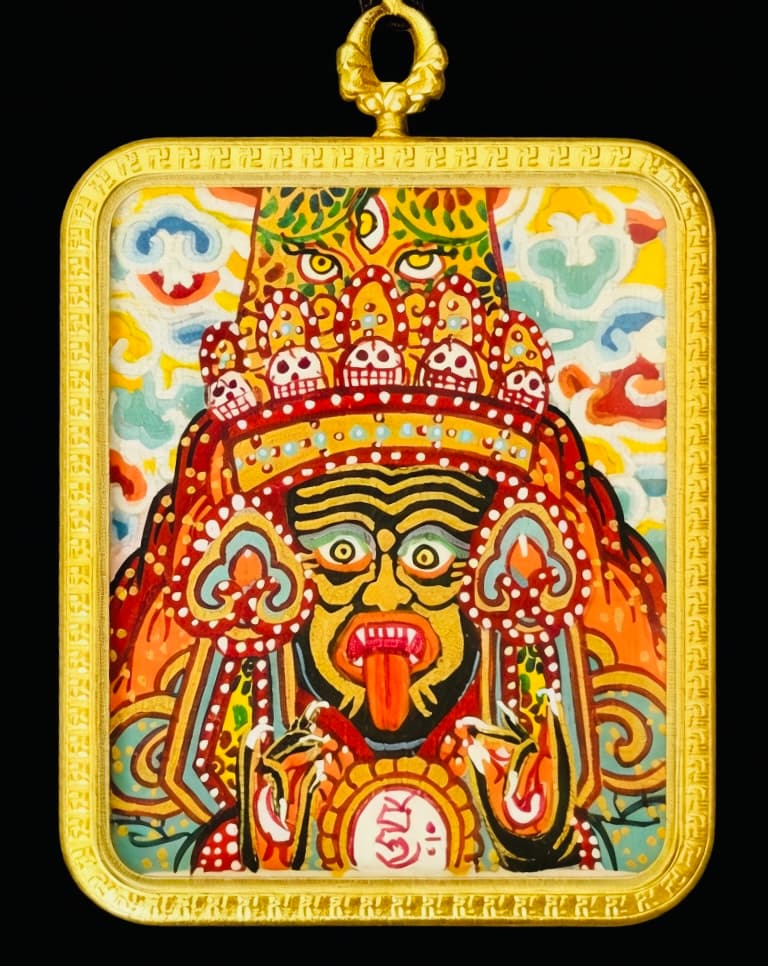
Zaki Lhamo Miniature Thangka Card
Zaki Lhamo Miniature Thangka Card
$550.00
Why it relates to this guide
Seller record RT-2026-009 uses Zaki Lhamo as its recorded subject and identifies a hand-painted 5 × 4 cm miniature card.
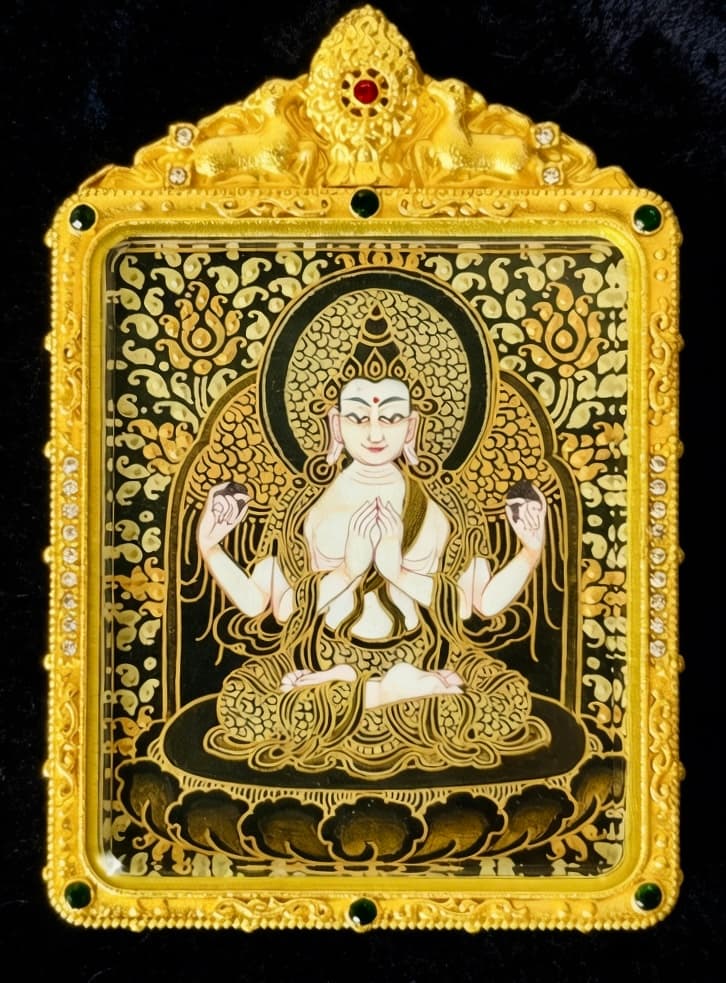
Four-Arm Chenrezig Miniature Thangka Pendant
Four-Arm Chenrezig Miniature Thangka Pendant
$1,300.00
Why it relates to this guide
Seller record RT-2026-010 uses Four-Armed Avalokiteshvara (Chenrezig) as its recorded subject and identifies a hand-painted 5 × 4 cm pendant-style miniature.
Browse available works
View current works, dimensions, materials, and prices.